  • Instagram
  • Facebook
  • Pinterest
  • Youtube

SOY PICA PAU (PORTUGUESE SMOKY BEER-BRAISED SOY, PICKLES & CRISPY POTATOES)

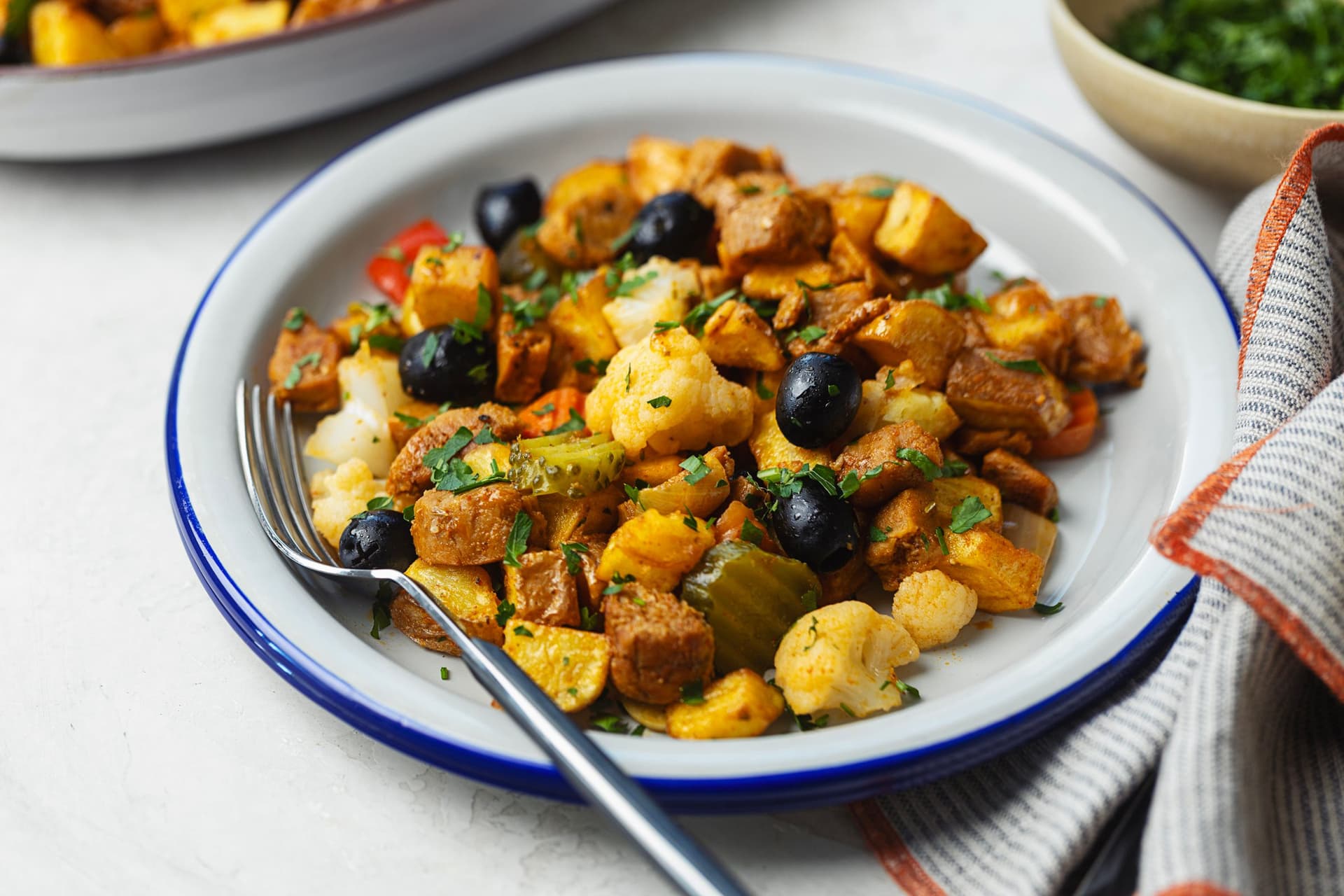
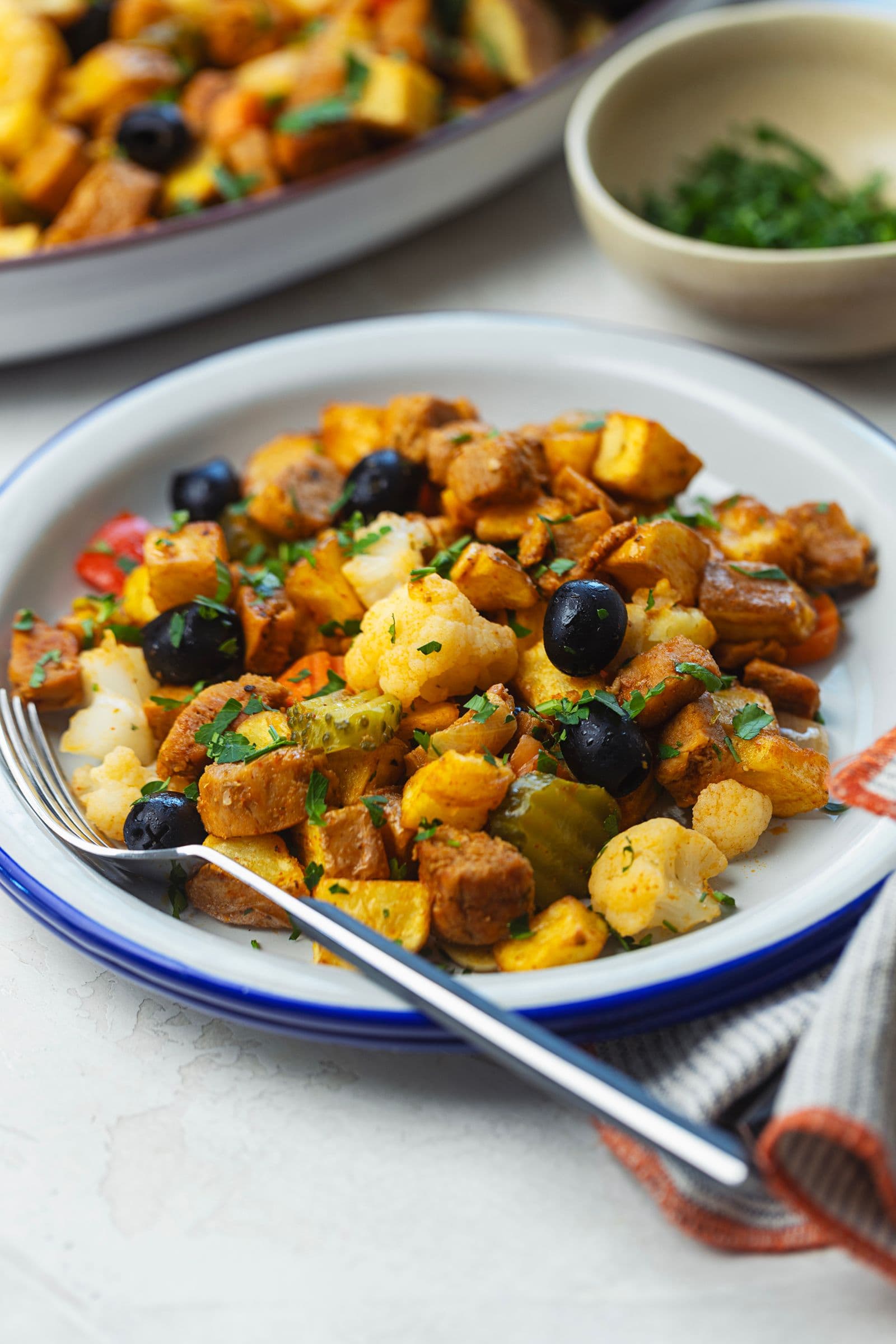
Blue-rimmed plate with a serving of soy pica pau shot from a low side angle, featuring black olives, cauliflower, pickles, crispy potatoes and caramelised soy with fresh parsley

A Portuguese classic, reinvented. Smoky, tender soy chunks with peppers, pickles, olives and crispy potatoes. Meaty, bold and completely plant-based.

Hi everyone, Rita here. Let me be honest with you: despite considering ourselves pretty good cooks, I don't always feel completely confident that the recipes we share are 100% perfect. That comes from a place of insecurity fuelled by my own perfectionism. In reality, there's absolutely nothing wrong with them, because if there were, they wouldn't be here. But I can't help it. There's always a little voice asking "is this good enough?".

Not with this one. For those unfamiliar: Pica Pau is a beloved Portuguese dish, traditionally made with pork or beef, peppers, pickles, and olives, all brought together in a punchy, beer-based sauce and sided with crispy fried potatoes. It's named Pica Pau — woodpecker — because this is a sort of dish you eat with a fork or toothpick, picking at the pieces, much like a woodpecker at a tree. It's the kind of thing that shows up at late-night dinners, a dish with real sentimental weight in Portuguese households and celebrations.

This recipe is spectacular, without a shadow of a doubt, and I wouldn't change a thing. How did I get to this level of certainty, you ask? It's been tested and refined over years (yes, years), for the simple reason that it's a classic, a family favourite that couldn't be left behind just because "Rita and André don't eat meat anymore". We eat the alternatives. But meat alternatives in a recipe like this can be temperamental: tofu isn't the same thing, seitan can be unpleasantly chewy, and soy chunks almost always carry that beany, off-putting flavour that's genuinely hard to get rid of. Hard, that is, until you know how. After years of wrestling with soy, I can confidently say I've finally cracked it the formula that makes it taste exactly the way you want it to. Here are our three biggest tips, refined over years of trial and error, in order of importance:

  1. To ensure flavour: the best results come from rehydrating the soy in a pot of well-seasoned vegetable stock, with a generous spoonful of marmite stirred in, simmering for 20 minutes. After draining, let the chunks cool enough to handle, then squeeze out as much liquid as possible with clean hands. That liquid is where the beany flavour lives, and we don't want it anywhere near our food.
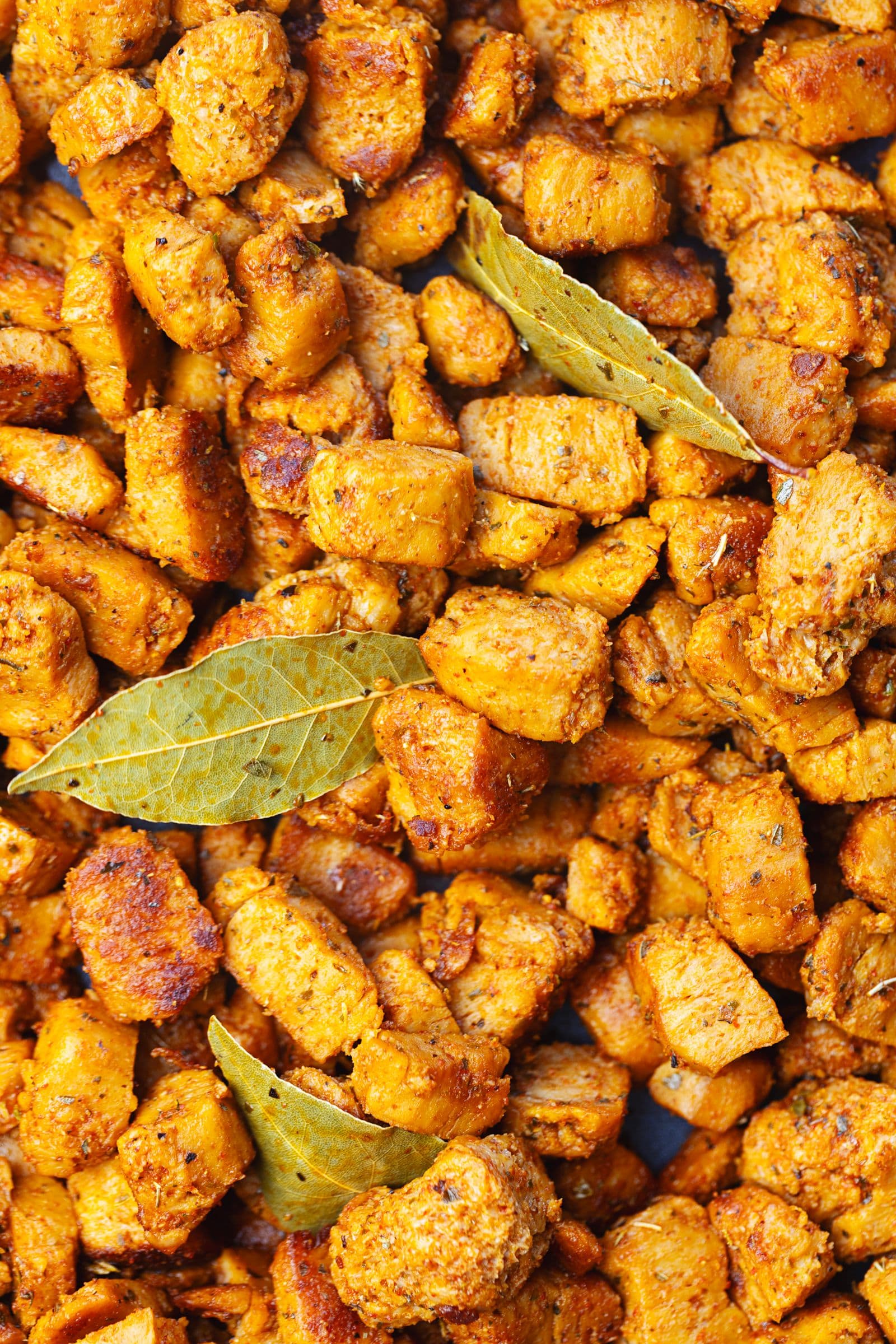
  2. To ensure texture: once rehydrated, the soy chunks should be fried in olive oil over high heat with plenty of seasoning, to seal the surface, develop good caramelisation, and create a texture that's slightly firm on the outside and tender in the centre. This is how you avoid spongy soy.
  3. To ensure quality: the brand matters more than you'd think. Some sell larger chunks, others smaller; some are too firm and resistant to hydration, others turn out mushy with an odd texture. You want the soy pieces to really hold their own, but be able to take in flavours. We can tell you what we go for in Portugal — Salutem's Protisoja chunks — but there's nothing like testing a few options for yourself to find out what you like best.

This is the technique behind a recipe I can find no fault with. It will win over everyone, from devoted soy enthusiasts to the most committed sceptics. And it feels especially good to share a recipe I'm this proud of in response to a challenge that came to us from Frente Animal.

Frente Animal is a Portuguese animal rights organisation dedicated to exposing and challenging the conditions of animals in industrial farming. This week, in partnership with Prova dos Factos — an investigative journalism programme on Portugal's public broadcaster RTP — they released an investigation into the conditions inside intensive pig farming operations in Portugal. The footage was captured by a group of investigators from WIRE and it is difficult to watch. It serves as yet another reminder of why it's worth finding alternatives that genuinely satisfy.

This Soy Pica Pau is one of them. It's not a consolation version, it's not "good for a vegan recipe", it's simply good. Here it is now, for everyone to enjoy, built on years of secrets we're happy to finally share.
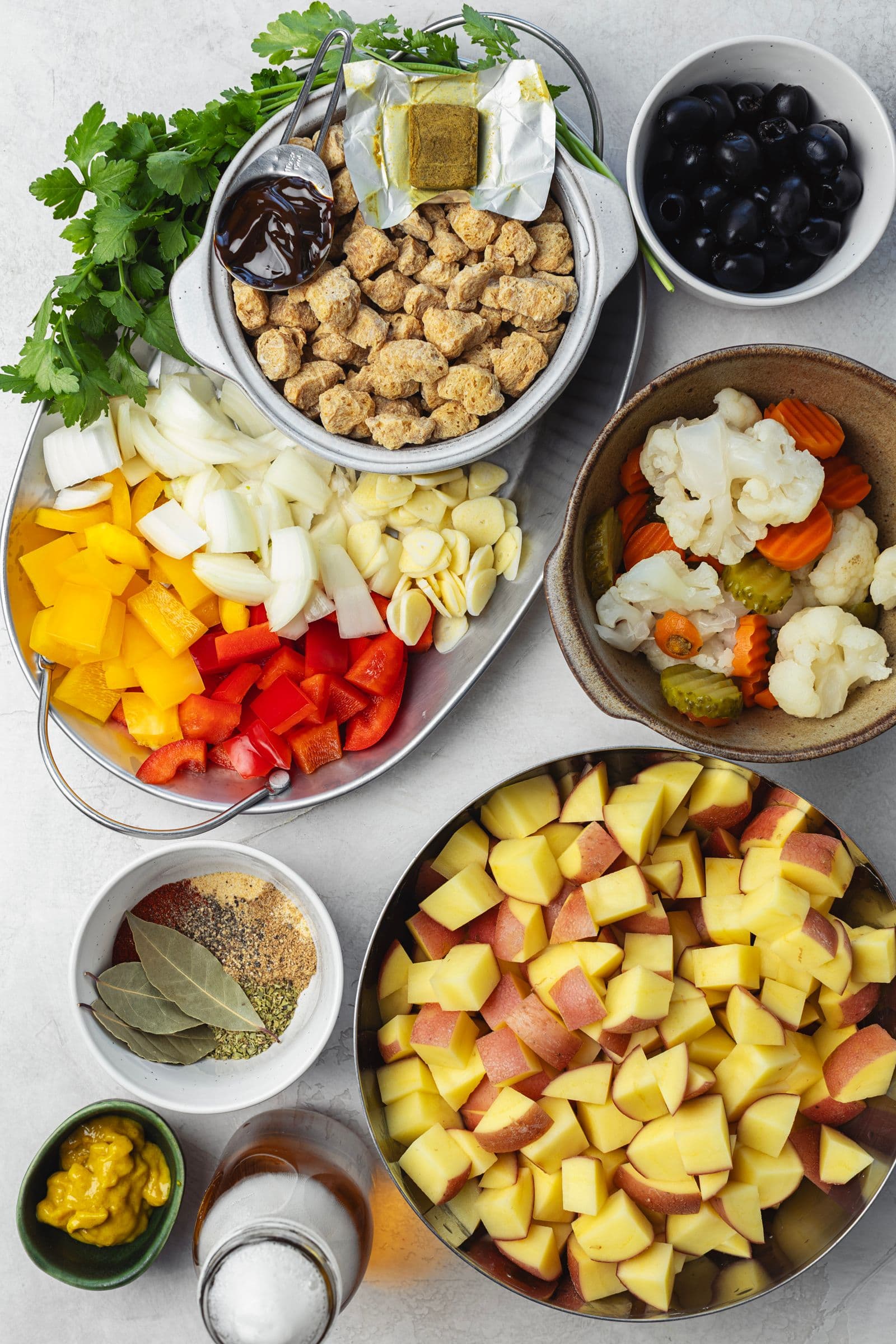
Flat lay of soy pica pau ingredients in bowls: dry soy chunks, cubed red potatoes, bell peppers, onion, garlic, black olives, pickled vegetables, spices, mustard and fresh parsley
Pinterest Icon
Close-up of caramelised spiced soy chunks with bay leaves in a dark pan
Pinterest Icon
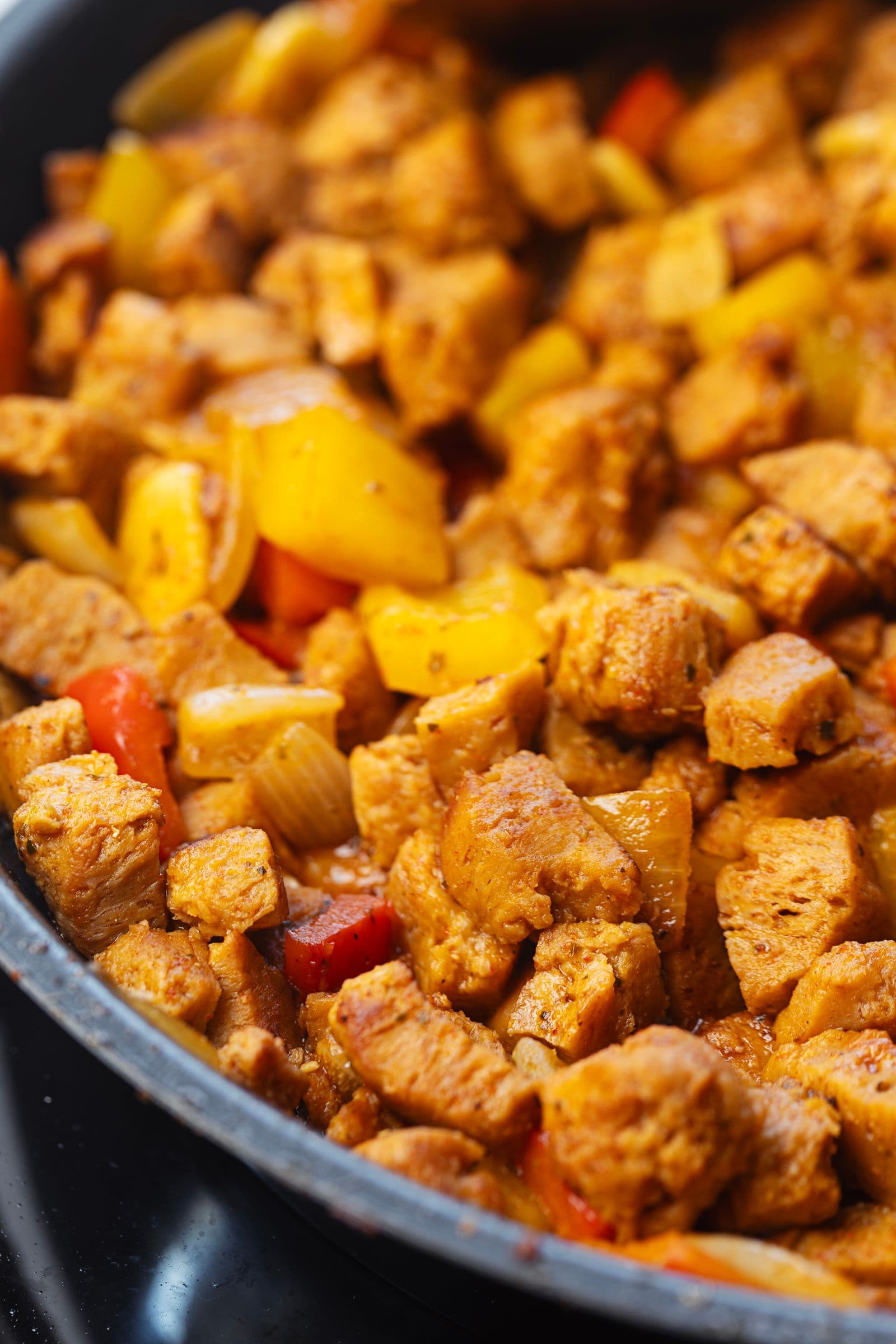
Soy chunks sautéed with yellow and red bell peppers in a skillet, mid-cook in the soy pica pau recipe
Pinterest Icon
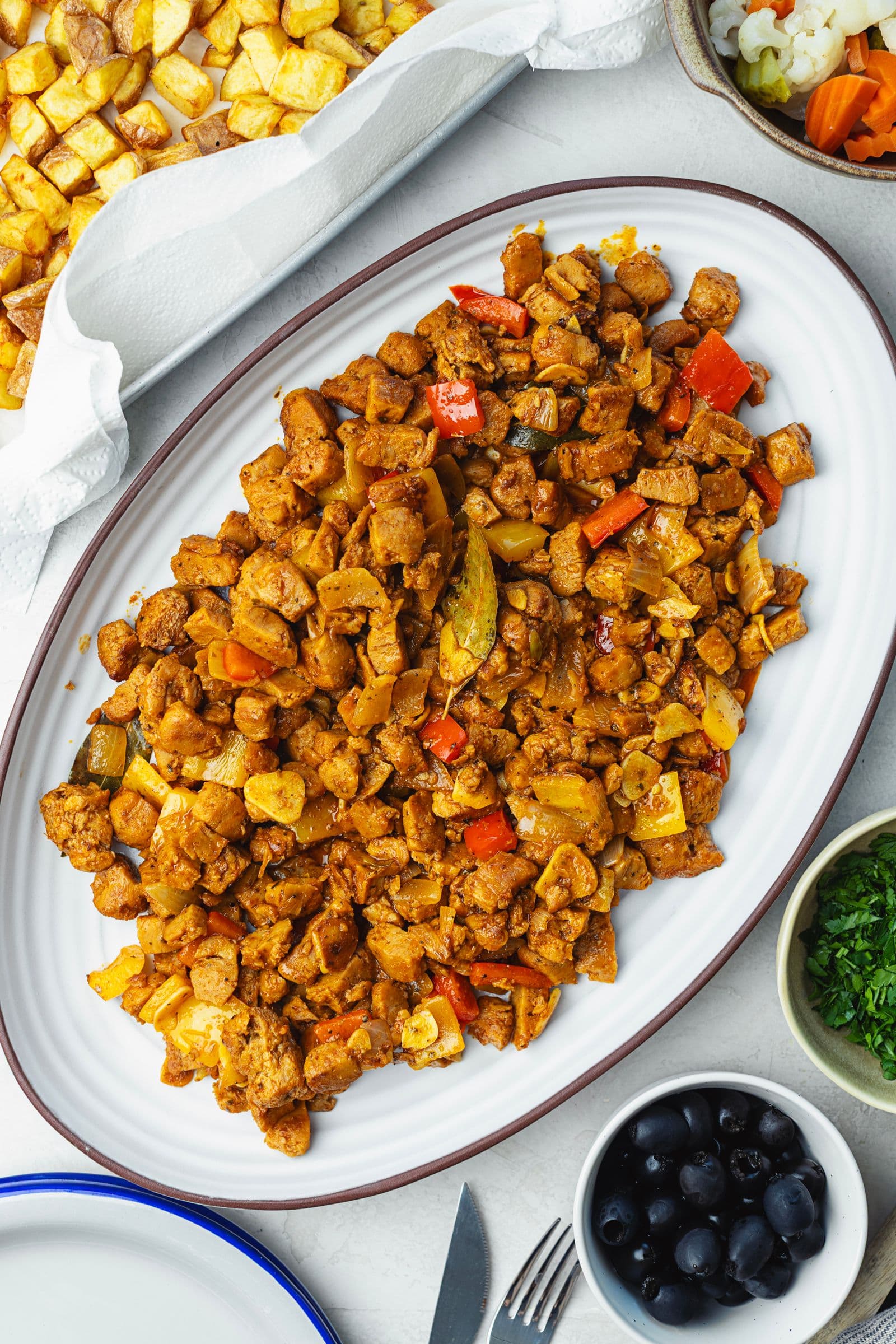
Oval serving dish with soy pica pau before adding the potatoes, surrounded by crispy potatoes, black olives and chopped parsley
Pinterest Icon
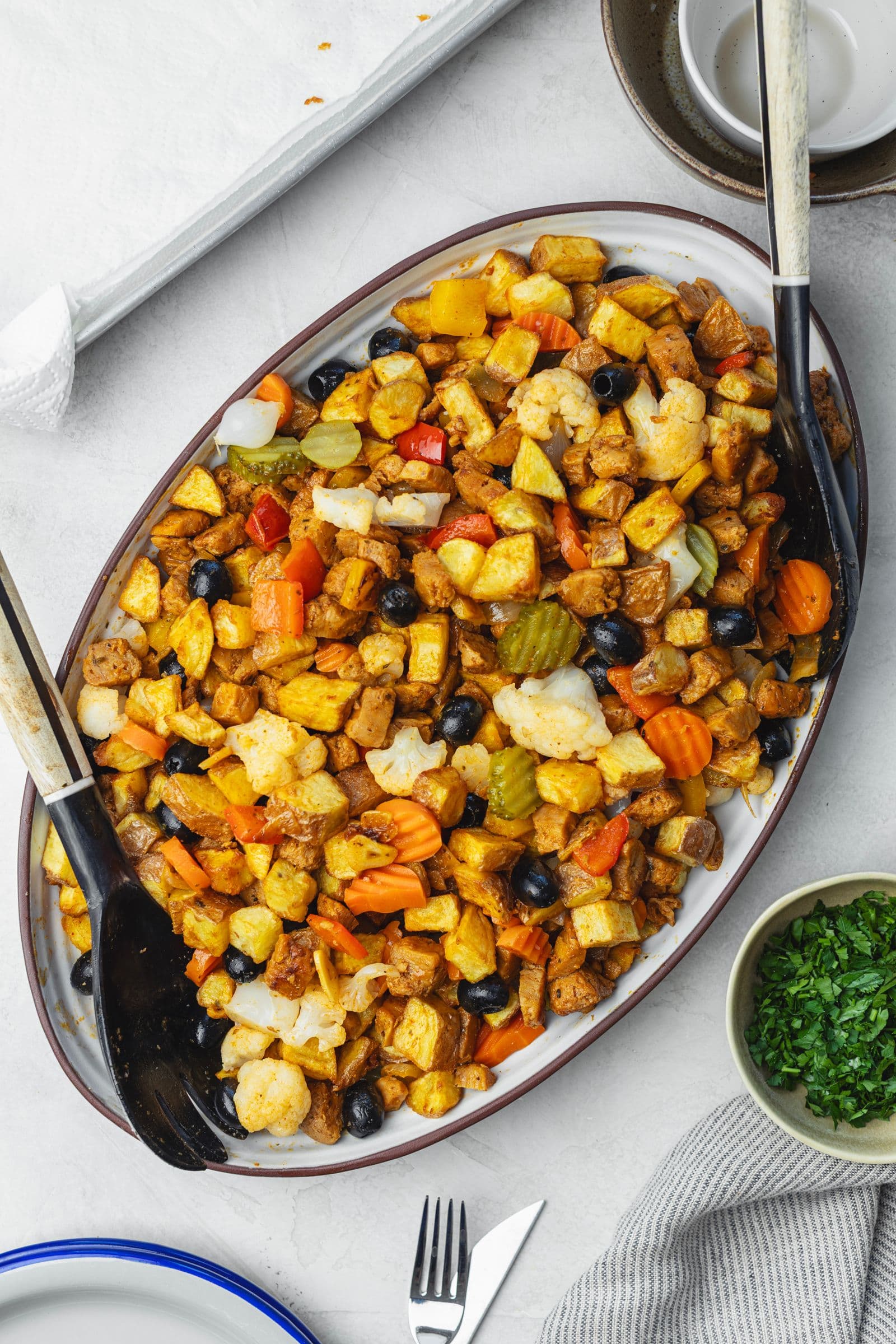
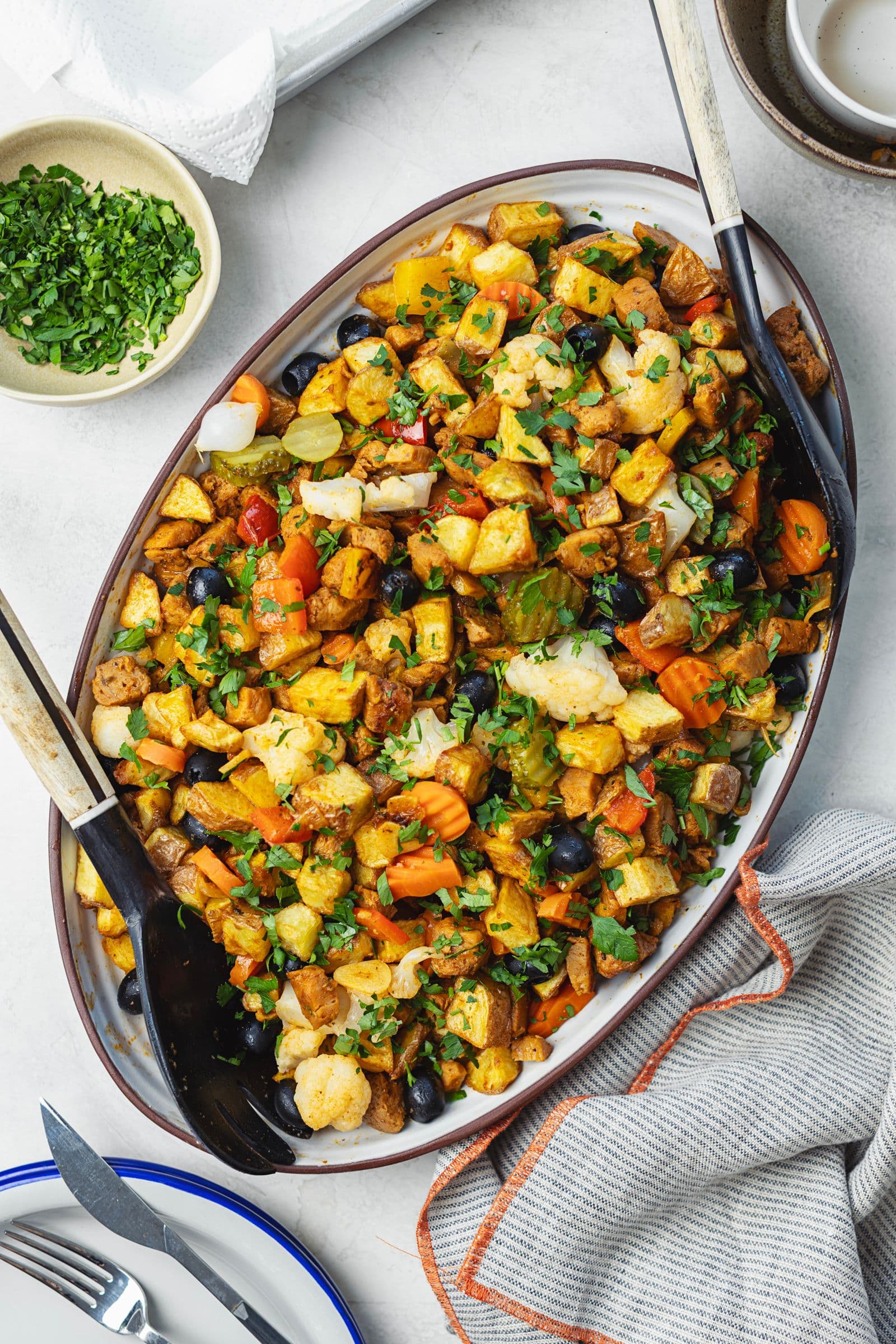
Overhead view of oval platter with complete soy pica pau: soy chunks, fried potatoes, pickles, black olives, cauliflower and carrots, with serving spoons
Pinterest Icon
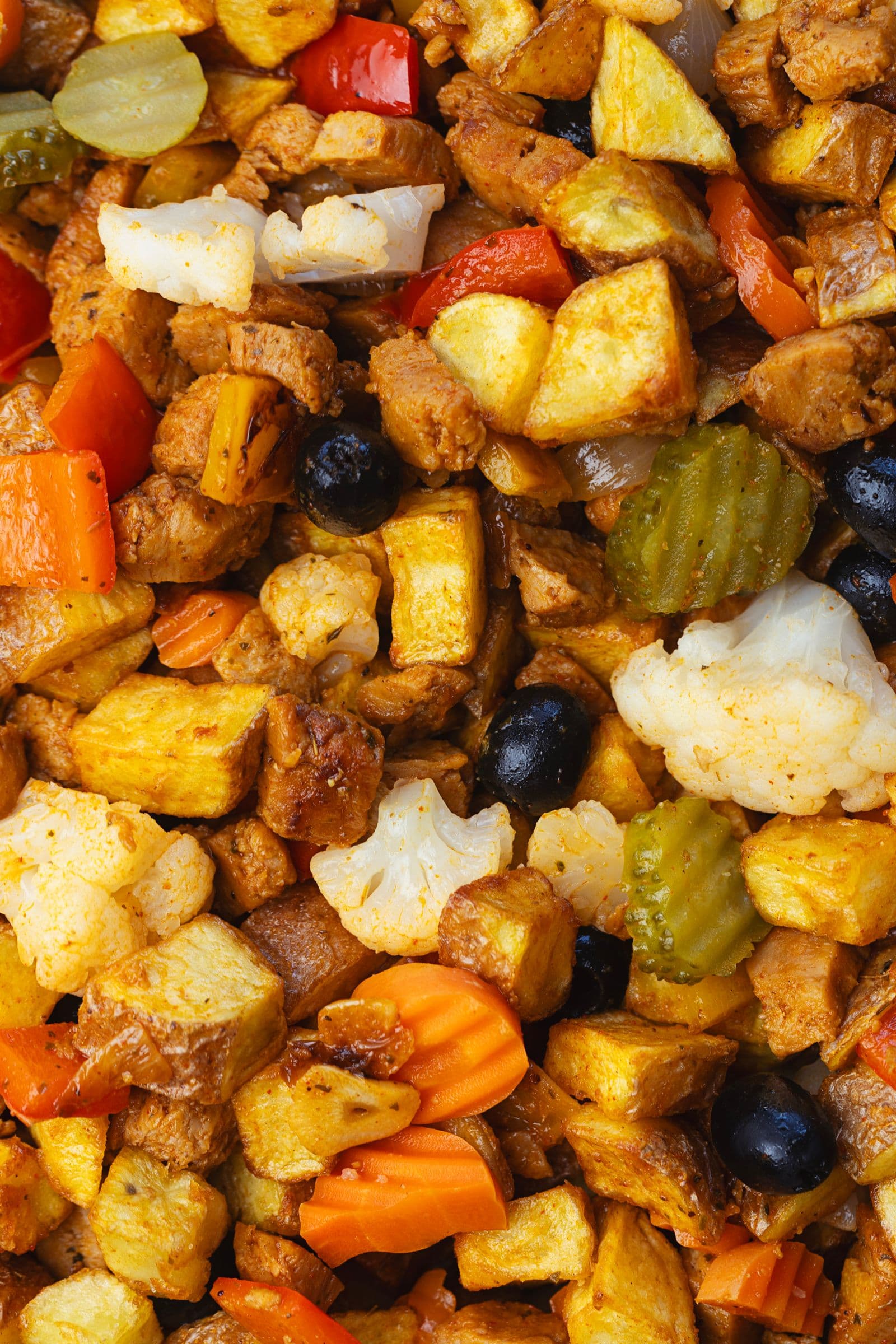
Close-up of soy pica pau with crispy potatoes, black olives, pickled cauliflower and carrots, caramelised soy chunks and bell peppers
Pinterest Icon
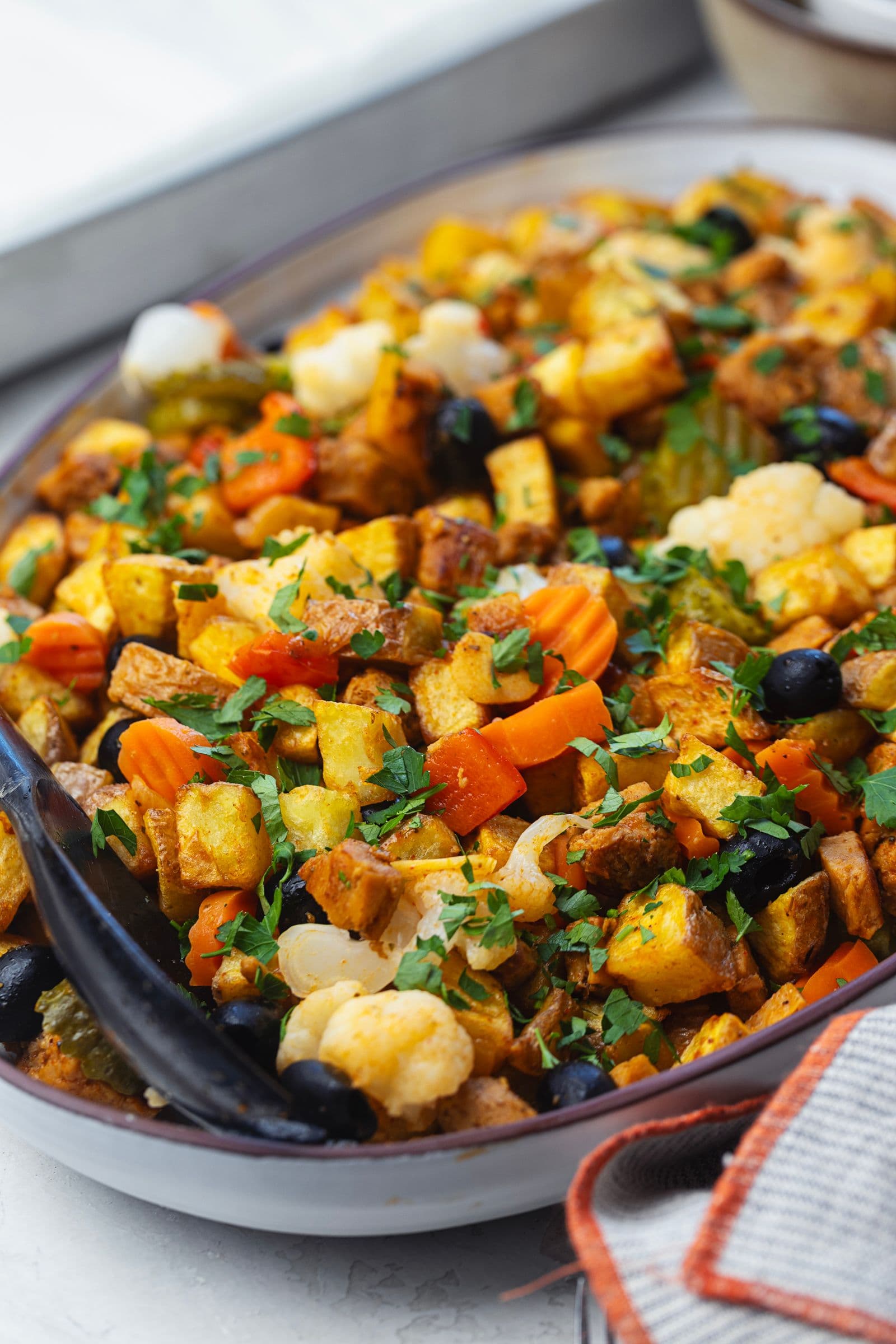
Serving dish of soy pica pau scattered with fresh chopped parsley, featuring soy, potatoes, pickles, olives and carrots, shot at a slight angle
Pinterest Icon
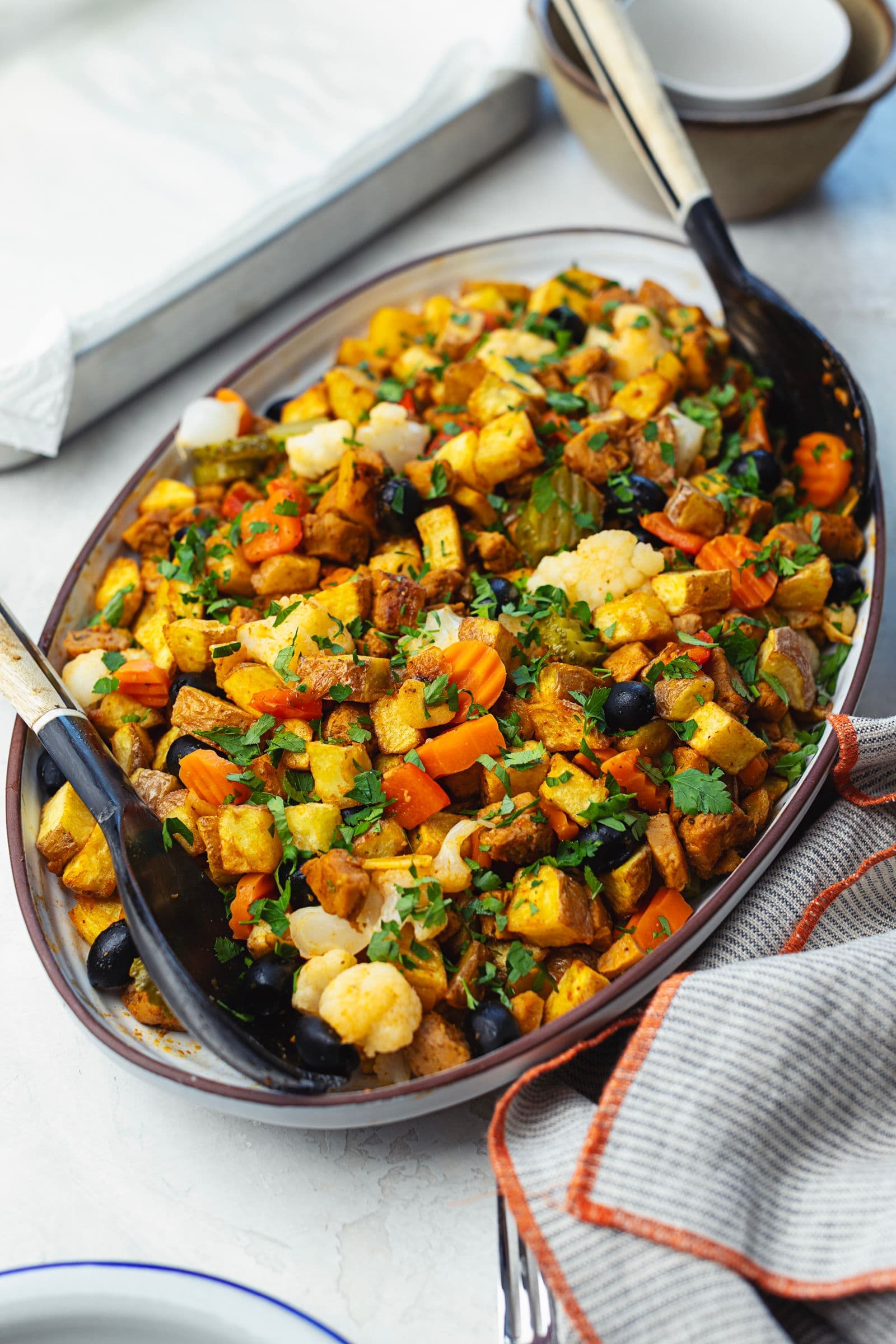
Oval platter of soy pica pau with crispy potatoes, black olives, pickles, carrot and cauliflower, scattered with fresh parsley, shot from a slight side angle
Pinterest Icon
Overhead shot of oval platter with complete soy pica pau topped with chopped parsley, parsley bowl and cutlery alongside
Pinterest Icon
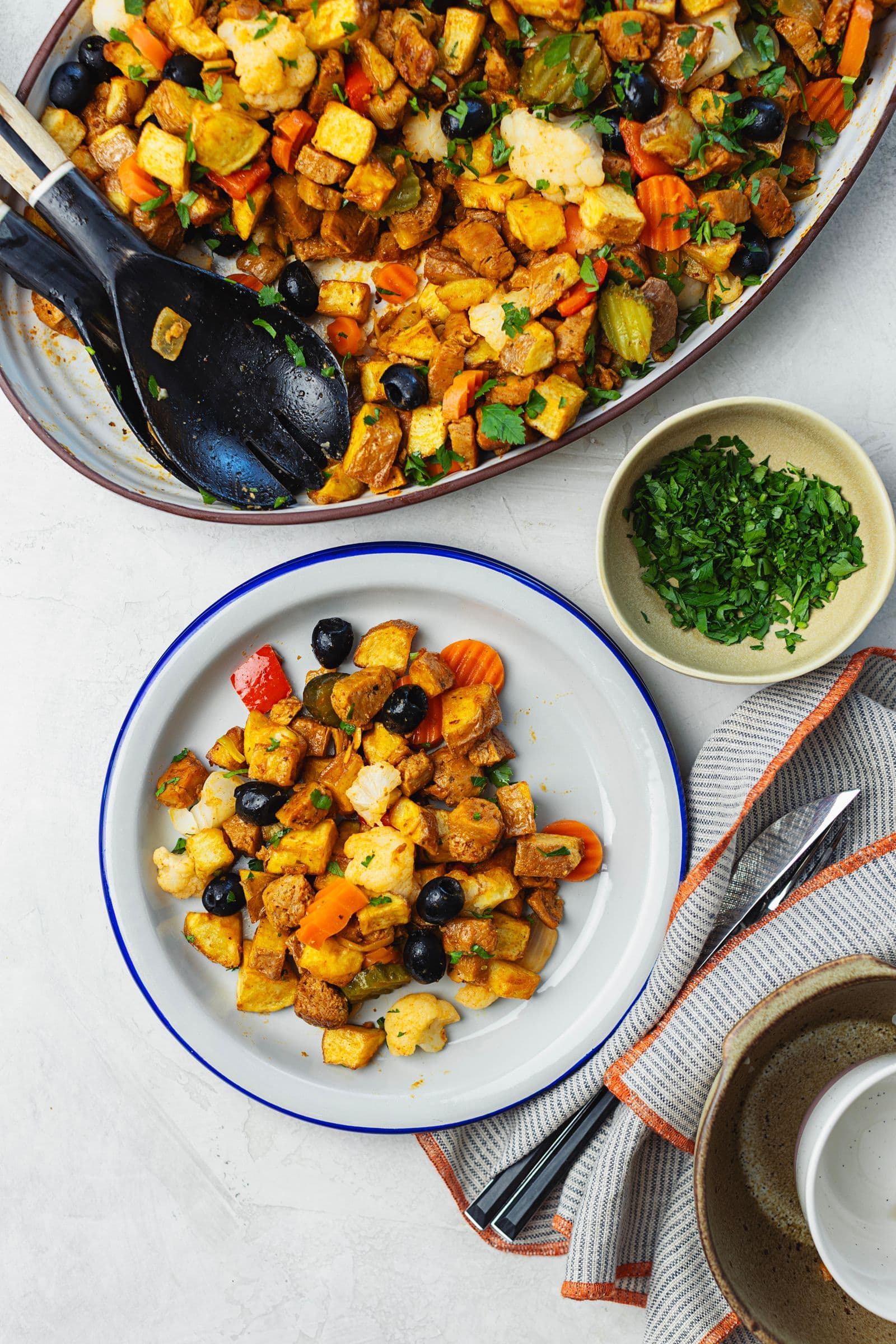
Serving platter of soy pica pau in the background with serving spoons, and a blue-rimmed individual plate with a served portion in the foreground, alongside chopped parsley
Pinterest Icon
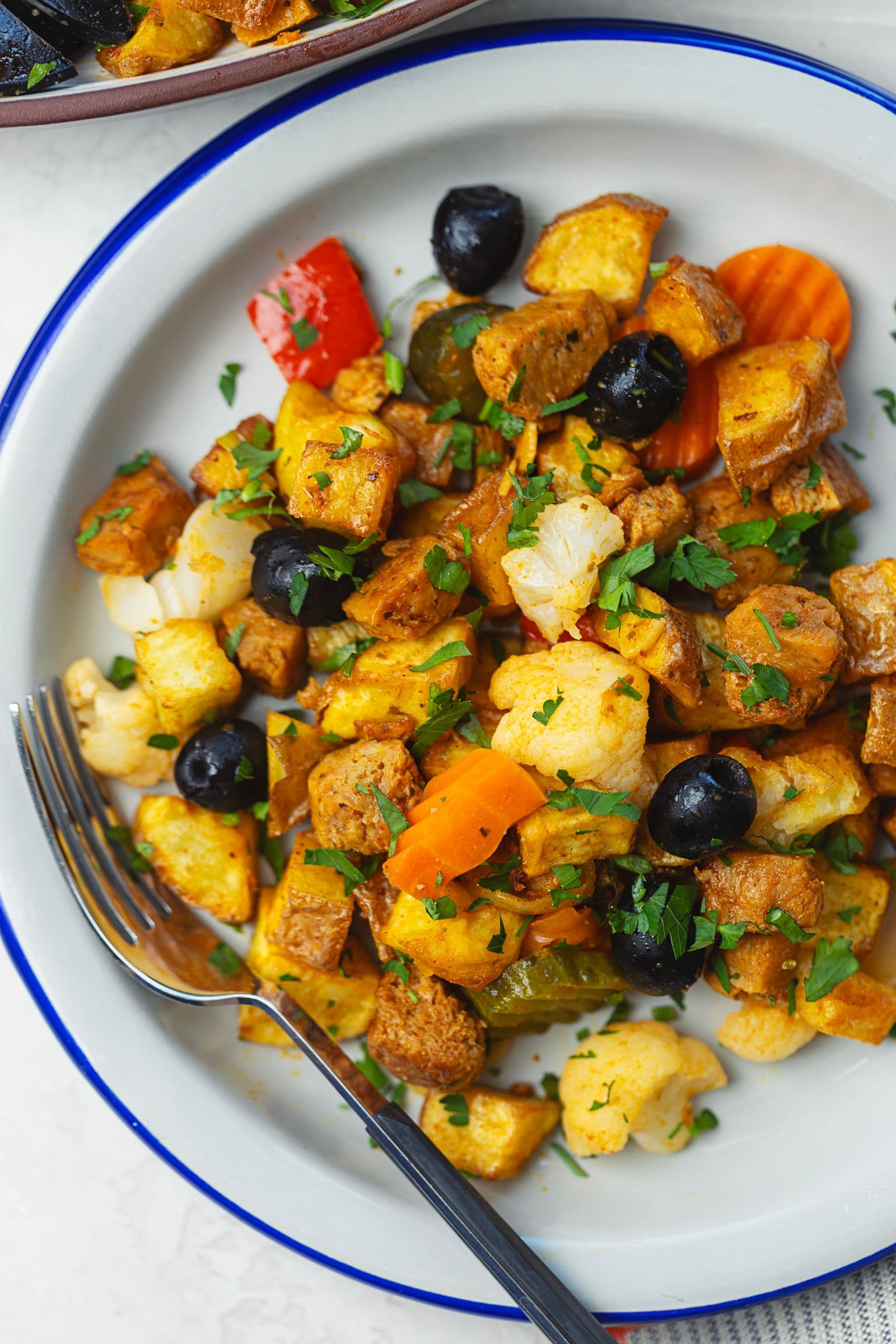
Overhead view of blue-rimmed plate with a serving of soy pica pau: fried potatoes, soy chunks, black olives, cauliflower, pepper, carrot and fresh parsley, with a fork
Pinterest Icon
Blue-rimmed plate with a portion of soy pica pau at a slightly elevated front angle, showing black olives, pickled cauliflower, crispy potatoes and caramelised soy topped with parsley
Pinterest Icon
Petals
  Soy Pica Pau (Portuguese Smoky Beer-Braised Soy, Pickles & Crispy Potatoes)
Soy Pica Pau (Portuguese Smoky Beer-Braised Soy, Pickles & Crispy Potatoes)
Leave a Comment
6 to 8 portions
1 hour
Ingredients
  • 200 g (7 oz) soy chunks
  • 4 cups (1 litre) vegetable broth (or 1 litre water with 2 stock cubes)
  • 1 tablespoon marmite
  • Olive oil, as needed
  • 3 bay leaves
  • 1 tablespoon smoked paprika
  • 1 teaspoon ground coriander
  • ½ teaspoon garlic powder
  • 1 tablespoon dried oregano
  • ½ teaspoon black pepper
  • ½ teaspoon sea salt
  • 1 medium yellow onion, roughly chopped
  • ½ red bell pepper, roughly chopped
  • ½ yellow bell pepper, roughly chopped
  • 4 garlic cloves, thinly sliced
  • 1 kg red potatoes, washed and cut into roughly ½-inch cubes
  • Oil for frying
  • 1 can (25 cl) beer
  • 1 heaping tablespoon english mustard
  • 250 g pickled vegetables
  • A handful of pitted black olives
  • Fresh chopped parsley, to taste
Instructions

Start by gathering, preparing and measuring all of the ingredients. This will improve your dynamic in the kitchen.

  1. Place a medium pot over high heat with the vegetable broth and marmite, stirring to dissolve.
  2. Bring to a boil and add the dry soy chunks. Reduce to medium heat and cook for 20 minutes, or until the chunks are fully hydrated and tender.
  3. While the soy is hydrating, fry the potato cubes in a deep fryer or air fryer until golden and crispy on the outside and perfectly tender in the centre. Drain well, season with fine salt and set aside.
  4. After 20 minutes, drain the cooking liquid and leave the soy chunks to cool enough to squeeze out all the liquid inside, using clean hands.
  5. Heat a generous drizzle of olive oil in a large skillet over high heat and add the rehydrated, squeezed soy chunks.
  6. Add the bay leaves, spices, seasonings and dried herbs, and fry over high heat for 6–8 minutes, stirring frequently. The soy should be well fried and caramelised.
  7. Remove the soy chunks to a separate bowl and set aside.
  8. Drizzle a little more olive oil into the skillet and add the same bay leaves, onion, peppers and garlic. Fry over high heat for 3–5 minutes, until the vegetables are tender and lightly caramelised. Add the soy chunks back in and toss everything together.
  9. Add the beer and mustard, stir to combine, and let it bubble vigorously over high heat until the sauce reduces and the alcohol cooks off.
  10. When the sauce is rich and thick, transfer everything to a large serving dish, add the pickles, olives and fried potatoes and mix together.
  11. Serve immediately, scattered with fresh chopped parsley.
Note

Store any leftovers in an airtight container in the fridge for up to 3 days. The potatoes will lose their crunch. If you want to keep it, store them separately, reheat in the air fryer and add just before serving.

Add Comment
Your email will not be published.

No comments yet.

Browse the eBooks
We Can Help You Cook More And Worry Less